
Trading, Import and Export in the UAE: Build the Product Flow Before the Company
Plan a UAE trading or import-export business around products, customs, approvals, storage, landed cost, payments and the route that supports the flow.
Answer in brief
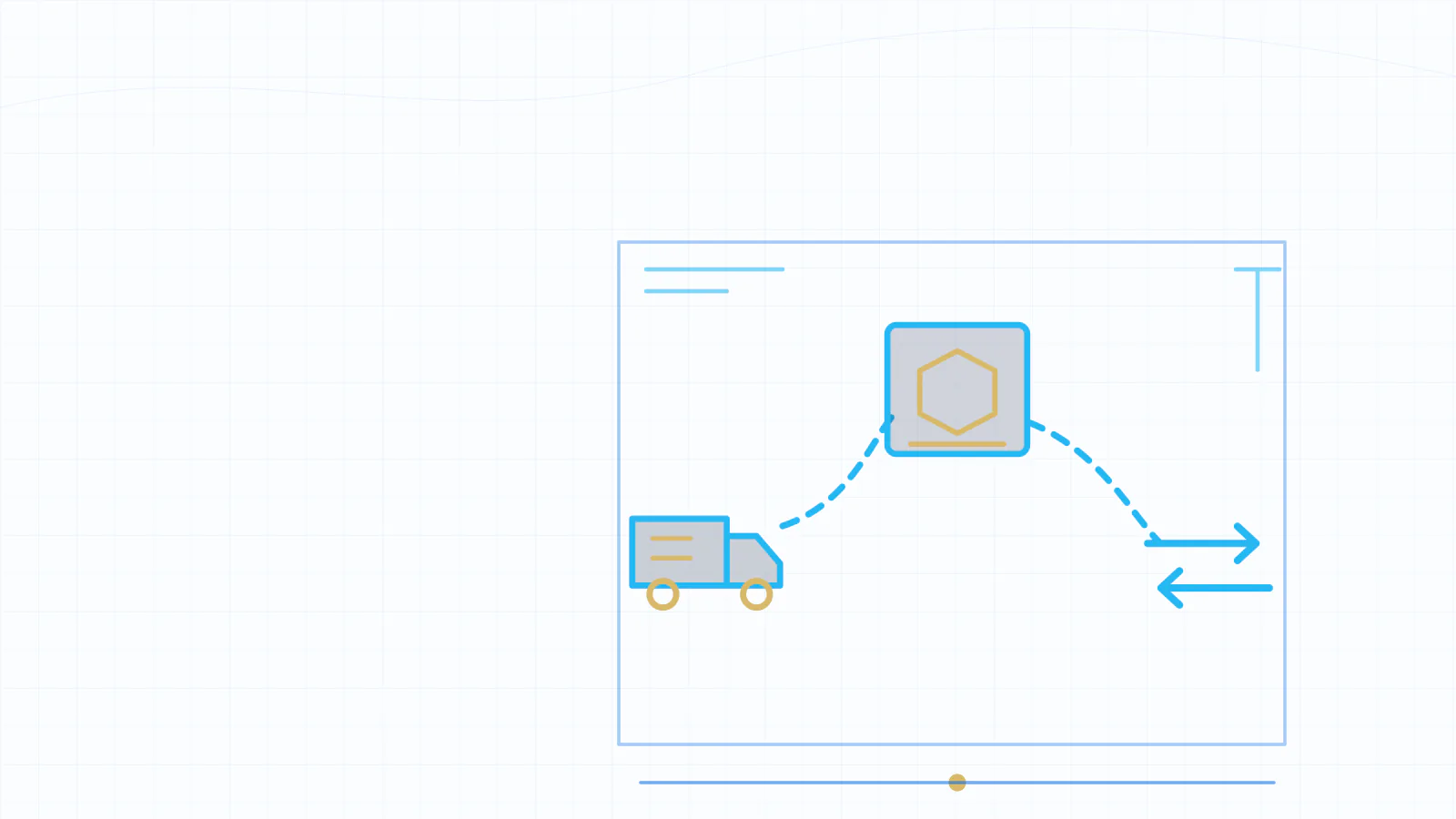
A trading company should be designed around the movement of goods, not the word “trading” on a licence. Before choosing a jurisdiction, map the product, supplier, importer of record, customs entry, storage point, customer, payment terms and final delivery.
- A trading company should be designed around the movement of goods, not the word “trading” on a licence.
- That product-flow map usually exposes the real setup questions.
- The UAE Government’s current customs-clearance guidance distinguishes prohibited and restricted goods and makes clear that product treatment depends on the goods and applicable customs rules.
- The commercial description used by a sales team is rarely enough for customs.
- A company may be licensed to trade a category of goods while an individual product still requires registration, conformity evidence, health approval, labelling or another sector control.
A trading company should be designed around the movement of goods, not the word “trading” on a licence. Before choosing a jurisdiction, map the product, supplier, importer of record, customs entry, storage point, customer, payment terms and final delivery.
That product-flow map usually exposes the real setup questions. Will the company import into the UAE for local sale, re-export goods, distribute products owned by another party, act as an agent, or trade internationally without every shipment entering the UAE? Will it hold inventory? Who carries product liability and warranty obligations? Which party pays customs duty and taxes?
Dubai Customs’ current customs-clearance guidance illustrates how declaration and clearance services vary by goods and movement type; businesses using another port must confirm the responsible customs authority’s rules. Certificates of origin and trade measures can also become part of the evidence chain. A trade licence alone does not answer those questions.
Classify the product before costing the business
The commercial description used by a sales team is rarely enough for customs. Product classification can affect duty, restrictions, documentation and conformity requirements. Build a controlled product list with descriptions, origin, supplier, expected Harmonized System classification, approval status and intended market. Verify classifications and restrictions with the competent customs and product authority before relying on a landed-cost model.
Separate licence scope from product approval
A company may be licensed to trade a category of goods while an individual product still requires registration, conformity evidence, health approval, labelling or another sector control. Food, cosmetics, medical products, chemicals and some technical goods are obvious examples, but the correct regulator depends on the product and emirate.
Model the landed cost, not only the purchase price
A useful trading model includes supplier price, freight, insurance, customs, storage, handling, inspection, payment charges, returns, damaged stock, finance cost and the time between paying the supplier and collecting from the customer. A business can show an attractive gross margin and still consume cash because inventory and receivables move slowly.
Make the banking story match the trade flow
Banks and payment providers will want a coherent explanation of counterparties, countries, goods, invoices and expected transaction values. Contracts, supplier documents, customs records and the licensed activity should tell the same story.
Choose the setup route only after the product flow is understood. The right structure is the one that can lawfully support the goods, facility, customs process, payments and customer market without an avoidable second setup later.
What changes when the facts change
A decision about Trading, Import & Export can change when the operating facts change, even if the company name and founders stay the same. The safe way to use this page is to freeze the facts that drive the answer: what the business sells, who pays it, where delivery happens, which entity signs and invoices, what staff or premises are required, and whether a sector authority sits outside the economic licence. If any of those facts moves, re-test the conclusion instead of assuming the original route automatically stretches to the new model.
For trading import export UAE, the highest-risk change is usually not cosmetic. A new revenue stream, a regulated feature, local delivery, a new shareholder, a larger team, a different customer type or a new emirate can alter the activity, approval, banking, premises or documentation analysis. The existing guidance on Classify the product before costing the business, Separate licence scope from product approval, Model the landed cost, not only the purchase price should therefore be treated as a connected operating model rather than separate checklist items.
Do not confuse this with the neighbouring decision
Trading, Import & Export owns a particular question. The surrounding pages exist because a neighbouring question can use similar vocabulary while requiring a different answer, authority, cost model or operating test. Move to another guide when the reader's real question has crossed that boundary; do not force this page to become a universal answer.
| If the question becomes… | Use the page that owns it |
|---|---|
| The question has narrowed to Business Types | Business Types |
| The question has narrowed to Business Activities & Licence Types | Business Activities & Licence Types |
| The question has narrowed to Approvals & Restrictions | Approvals & Restrictions |
| The question has narrowed to Costs & Renewals | Costs & Renewals |
| The question has narrowed to Build a First-Year Setup Budget | Build a First-Year Setup Budget |
This separation also protects search intent. It lets the current page answer trading import export UAE deeply while the related page owns its narrower or adjacent decision. Internal links should therefore be contextual: link at the point where the reader's next question naturally begins, not simply because two pages share a word.
Stress-test the decision with real operating situations
-
An overseas founder testing the UAE. The founder wants a lean start, may not yet need a large team and is comparing providers from outside the country. For Trading, Import & Export, the useful test is whether classify the product before costing the business and separate licence scope from product approval support the first real contract, banking explanation and next likely change. A low starting package should not decide the structure if the first customer, visa, premises need or regulated feature would force an early amendment or migration.
-
A company selling mainly inside the UAE. Local customers, on-site delivery, staff, premises, procurement or sector approvals can make the operating footprint more important than the headline setup route. In trading import export UAE, document who performs the work, where it occurs, which entity invoices and which evidence a customer or authority may request. Then test model the landed cost, not only the purchase price against that local operating reality rather than a generic package description.
-
An enterprise-facing or regulated model. A large buyer or regulated sector can impose controls that sit beyond incorporation. Depending on Trading, Import & Export, the business may need stronger contracting, insurance, information-security evidence, professional credentials, tender documentation, data controls or external approval. The page should not assume those requirements apply universally; it should flag the boundary and send the reader to the authority or specialist where the case becomes specific.
Read the cost in context
Do not compare Trading, Import & Export by one headline number. Separate authority charges, provider or professional charges, applicant-dependent setup items and the working capital needed to become operational. A price can be accurate for a defined package and still be irrelevant to the complete first-year economics of the actual business.
| Cost layer | How to treat it |
|---|---|
| Official or authority fee | Use the current amount only when the responsible authority publishes it for the exact service and scope. |
| Provider or professional fee | Treat it as a commercial charge; record the deliverable, assumptions, exclusions and refund position. |
| Variable setup item | Show the driver: premises, visas, attestations, translations, external approvals, professional evidence or amendments. |
| Operating capital | Include the people, inventory, technology, deposits, insurance, marketing and working capital needed after licensing. |
For trading import export UAE, any exact fee or threshold should remain tied to its source, date and scope. Where no reliable official total exists, explain the cost drivers rather than converting unrelated provider packages into a false UAE-wide benchmark.
Official evidence behind the decision
An official link should support a specific material statement in Trading, Import & Export; it should not decorate the source footer. The editorial layer may explain the commercial consequence of a rule, but it should keep the official rule and the editorial interpretation visibly separate. If the source is silent on a point, the article should not invent certainty.
| Primary-source family | Use it for | Limitation to record |
|---|---|---|
| customs-clearance guidance | Verify the specific factual point already cited in this article. | Confirm that the source applies to the exact activity, emirate, legal form, person, transaction or service being discussed. |
| UAE Legislation | Verify the specific factual point already cited in this article. | Confirm that the source applies to the exact activity, emirate, legal form, person, transaction or service being discussed. |
| Ministry of Economy and Tourism | Verify the specific factual point already cited in this article. | Confirm that the source applies to the exact activity, emirate, legal form, person, transaction or service being discussed. |
| UAE Government Portal | Verify the specific factual point already cited in this article. | Confirm that the source applies to the exact activity, emirate, legal form, person, transaction or service being discussed. |
When a live primary source and the article diverge, the responsible source controls the factual requirement. Update not only the sentence but also any recommendation that depended on the old premise. Keep the verification date visible so a later reader can understand when the conclusion was formed.
Turn the decision into a working brief
Before acting on Trading, Import & Export, put the operating assumptions in one short internal brief so the founder, provider, bank, finance team and later advisers work from the same facts.
At minimum, record:
-
what the company sells and who pays it;
-
planned activities and any separate approvals;
-
customer countries, sales channels and contract types;
-
ownership, management and authorised signatories;
-
premises, staffing and visa assumptions;
-
supplier, payment, banking and invoicing flows;
-
costs, fees or deadlines that still need live confirmation;
-
documents still to obtain and who owns each action;
-
the next likely change—new activity, employee, investor, market or regulated feature—the structure must support.
A practical review matrix
Use this matrix to test Trading, Import & Export before treating the answer as settled. The matrix is an editorial decision aid, not an authority checklist; the case-specific source still controls the factual requirement.
| Decision area | What a good answer looks like | Warning sign |
|---|---|---|
| Activity fit | The licensed activities describe what customers actually buy and the material ancillary work. | A broad sector label hides implementation, regulated or physical delivery. |
| Customer model | The structure supports who pays, where customers are and how contracts are delivered. | The route was selected before the sales model was known. |
| Approvals | External approvals are identified separately from the economic licence. | The licence is treated as permission for every sector function. |
| Delivery model | Premises, people, suppliers and operating responsibilities match the promise. | The website or proposal promises work the entity cannot operationally deliver. |
| Banking and payments | The company can explain counterparties, transaction flow and source of startup funds. | The bank file consists only of the licence and incorporation documents. |
| Tax and records | Ownership of accounting, invoicing and registration workstreams is assigned. | The team waits for a filing deadline before deciding who owns compliance. |
| Scale and exit | The route can support the next activity, employee, investor or market without a disproportionate rebuild. | The choice optimises only for incorporation day. |
Where otherwise good decisions go wrong
-
The trading import export UAE decision is made from a package label while a material revenue stream or delivery obligation sits outside the assumed scope.
-
The founder chooses around the starting price and later discovers that premises, banking, buyer procurement or an external approval requires a different footprint.
-
Contracts, invoices, the website and the licence describe materially different businesses.
-
The first-year budget covers formation but not the people, technology, inventory, insurance or working capital required to deliver.
-
A regulated or professional function is treated as automatically covered because it is delivered through a general commercial activity.
-
The structure works for the first customer but cannot support the next employee, activity, investor or market without an avoidable rebuild.
Limits of the page
Keeping Trading, Import & Export useful means being explicit about what it cannot decide without additional facts or specialist authority:
-
a universal activity code or approval answer;
-
a guaranteed bank, visa, payment-provider, procurement or licensing outcome;
-
personalised legal, tax, immigration, employment or regulated-profession advice;
-
a live total cost where the applicant facts and authority scope have not been confirmed;
-
a conclusion that ignores the actual contract, ownership, premises, data or delivery model.
That boundary is part of the value of the page. It shows where a general explanation stops before it becomes an unsupported personal conclusion.
Related decisions
Sources and verification
Frequently asked questions
The commercial description used by a sales team is rarely enough for customs. Product classification can affect duty, restrictions, documentation and conformity requirements. Build a controlled product list with descriptions, origin, supplier, expected Harmonized System classification, approval status and intended market. Verify classifications and restrictions with the competent customs and product authority before relying on a landed-cost model.
Do not compare Trading, Import & Export by one headline number. Separate authority charges, provider or professional charges, applicant-dependent setup items and the working capital needed to become operational. A price can be accurate for a defined package and still be irrelevant to the complete first-year economics of the actual business.
Use this matrix to test Trading, Import & Export before treating the answer as settled. The matrix is an editorial decision aid, not an authority checklist; the case-specific source still controls the factual requirement.
Related reading
- HubBusiness TypesCompare UAE business models by what customers pay for, how the company operates, and which activities, approvals and facilities may follow.
- Requirement GuideBusiness Activities & Licence TypesMatch customer deliverables to UAE business activities, understand licence categories, and identify combinations or regulated work that need further approval.
- YMYL GuideApprovals & RestrictionsLearn when a UAE business needs external approval, how to identify the regulator, and what to verify before paying or signing premises.